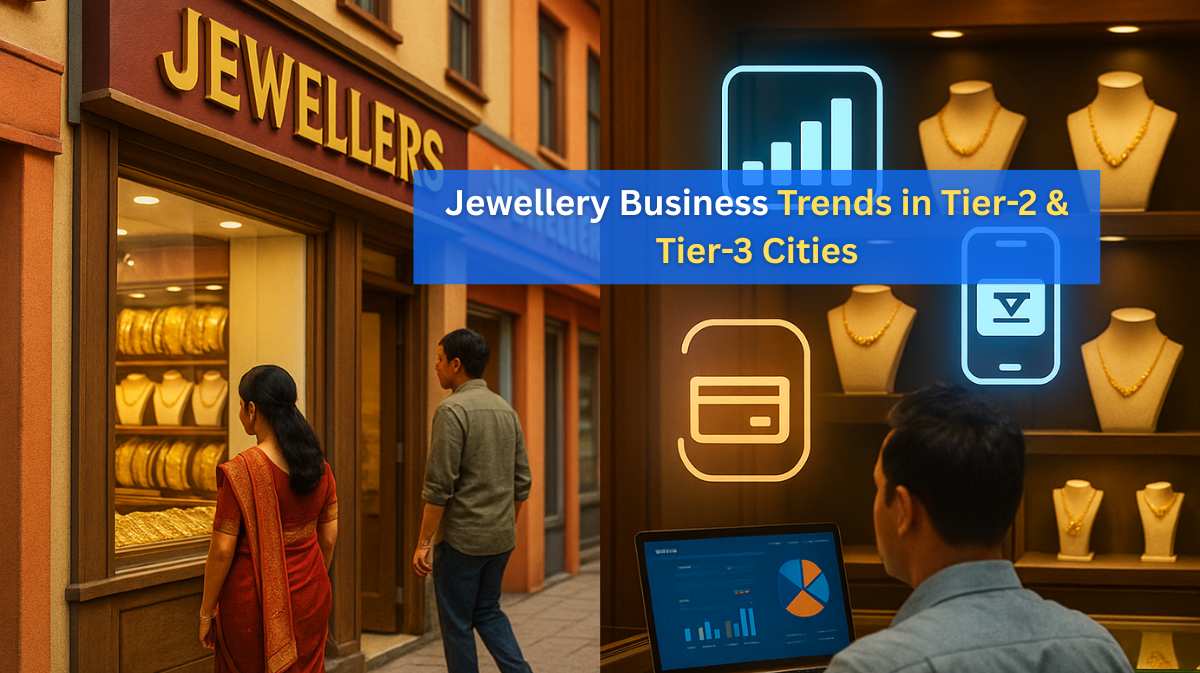
Jewellery Business Trends in Tier-2 & Tier-3 Cities
For decades, India’s jewellery market narrative revolved around metros like Mumbai, Delhi, Chennai, and Kolkata. However, in recent years, the spotlight has shifted towards Tier-2 and Tier-3 cities — the rising powerhouses of jewellery consumption. These smaller urban centres are not just following metro trends; they are carving their own distinct patterns of buying behaviour, investment choices, and fashion preferences.
From traditional gold investment to contemporary diamond adoption, and from offline charm to online convenience, the jewellery industry in these regions is undergoing rapid transformation. In 2025, the biggest opportunities for jewellers lie in understanding and leveraging these trends.
1. Rising Disposable Income & Aspirational Buying
The economic landscape of Tier-2 and Tier-3 cities has shifted dramatically. Increased employment opportunities, small business growth, and the expansion of service industries have resulted in higher disposable incomes among middle-class families.
- Jewellery beyond occasions: Customers are no longer restricting jewellery purchases to weddings or festivals. Lightweight gold chains, small diamond studs, and daily-wear bracelets are becoming common purchases.
- Aspirational purchases: Exposure to metro fashion trends through social media, OTT platforms, and influencers has created a demand for stylish, modern jewellery alongside traditional pieces.
- Local jewellers expanding range: Shops are now stocking minimalist designs, office-friendly jewellery, and fusion-style pieces to appeal to younger buyers.
Example: In cities like Coimbatore, Nagpur, and Bhopal, jewellery stores report increased sales of 18K gold daily wear and fashion-forward pieces designed for regular use, not just special occasions.
2. Gold as a Preferred Investment
While lifestyle trends evolve, gold remains the king of jewellery purchases in Tier-2 and Tier-3 markets. For many families, gold is both a cherished adornment and a financial safety net.
- Gold is viewed as a hedge against inflation and currency fluctuations.
- Gold loans and girvi transactions are common — requiring jewellers to maintain meticulous records.
- Price sensitivity is high; even small fluctuations in rates can influence buying decisions.
To cater to this, jewellers are:
- Displaying real-time gold prices in-store and online.
- Offering transparent pricing with detailed breakdowns.
- Running gold savings schemes to encourage systematic investments.
Digital solutions like jewellery management software allow jewellers to automate price updates, manage gold loan records, and issue accurate purchase receipts with purity and weight details.
3. Growing Popularity of Diamond & Gemstone Jewellery
While gold dominates the market, there’s a noticeable shift among younger customers towards diamonds, coloured gemstones, and platinum — especially for engagements, anniversaries, and gifting.
- Awareness campaigns by diamond councils and jewellery brands have improved knowledge about certified stones.
- Celebrity endorsements and influencer marketing are making gemstone jewellery fashionable.
- Coloured stones like emerald, ruby, and sapphire are gaining traction for their cultural and astrological significance.
Jewellers are responding by offering custom diamond settings, gemstone certifications, and affordable entry-level diamond pieces to suit different budgets.
4. Digital Transformation of Jewellery Stores
One of the most significant changes in Tier-2 and Tier-3 jewellery retail is the adoption of technology. Even smaller stores are now investing in digital tools for better inventory management, customer relationship building, and marketing.
- Inventory control: Jewellery software helps track stock movement, identify best-selling designs, and forecast demand for peak seasons.
- GST-compliant billing: Automated invoicing ensures accuracy and saves time.
- Customer engagement: CRM modules send reminders for purchase anniversaries, warranty expirations, and new collection launches.
- Mobile-friendly apps: Customers can browse designs, reserve pieces, and track custom orders from their phones.
In addition, jewellers are embracing social media marketing, running Instagram ads, and listing products on Google Business Profiles to reach tech-savvy buyers.
5. Festival & Wedding-Driven Sales Cycles
Festivals and weddings continue to be the backbone of jewellery sales in these cities. However, the approach is becoming more organised.
- Festival peaks: Diwali, Akshaya Tritiya, Dhanteras, and regional harvest festivals see massive demand spikes.
- Wedding seasons: Multiple weddings in a family often result in bulk purchases of gold, diamond, and silver jewellery.
- Pre-stock planning: Jewellers are using software to anticipate seasonal demand and ensure adequate stock availability.
Example: In Tier-3 towns of Punjab and Rajasthan, pre-wedding season promotions and gold rate freeze offers have become a standard marketing tactic.
6. Increased Demand for Customisation
Personalisation is now a strong demand driver in smaller cities. Customers want jewellery that reflects local traditions but with a modern twist.
- Custom bridal sets incorporating regional design motifs.
- Engraving names, dates, or special symbols.
- Using CAD-based tools for accurate previews of custom orders.
Jewellery software integrated with CAD design tools allows easy order tracking, design approvals, and delivery scheduling — ensuring a seamless customer experience.
7. Financing & Easy Payment Options
To make jewellery more accessible, jewellers in Tier-2 and Tier-3 cities are offering flexible payment plans.
- EMI plans with 0% interest for diamond and gold purchases.
- Gold savings schemes where customers deposit a fixed monthly amount towards future purchases.
- Automated reminders for scheme maturity and payment due dates.
Software integration ensures accurate plan tracking, reducing errors and improving customer trust.
8. The Road Ahead – Jewellery Business in 2025 & Beyond
The growth potential in India’s smaller cities is enormous. With rising incomes, evolving tastes, and increasing comfort with technology, Tier-2 and Tier-3 jewellery markets are set to outpace metro growth rates in certain categories.
Key Strategies for Success:
- Offer both traditional and trendy designs to cater to all age groups.
- Invest in software that supports inventory, billing, customer engagement, and compliance.
- Leverage social media for storytelling, product showcases, and festival campaigns.
- Provide transparent pricing and certifications to build long-term trust.
- Tap into financing schemes and gold savings plans to attract middle-income families.
Conclusion
The jewellery business in Tier-2 and Tier-3 cities is no longer playing catch-up with metros — it is setting its own pace and trends. Jewellers who embrace change, adopt technology, and understand local customer behaviour are well-positioned to thrive.
By combining traditional craftsmanship with digital efficiency, jewellery retailers in these cities can build a brand that resonates with both heritage-focused buyers and modern trendsetters. The next big wave of jewellery growth in India is not in the bustling malls of metros, but in the vibrant markets of smaller cities.