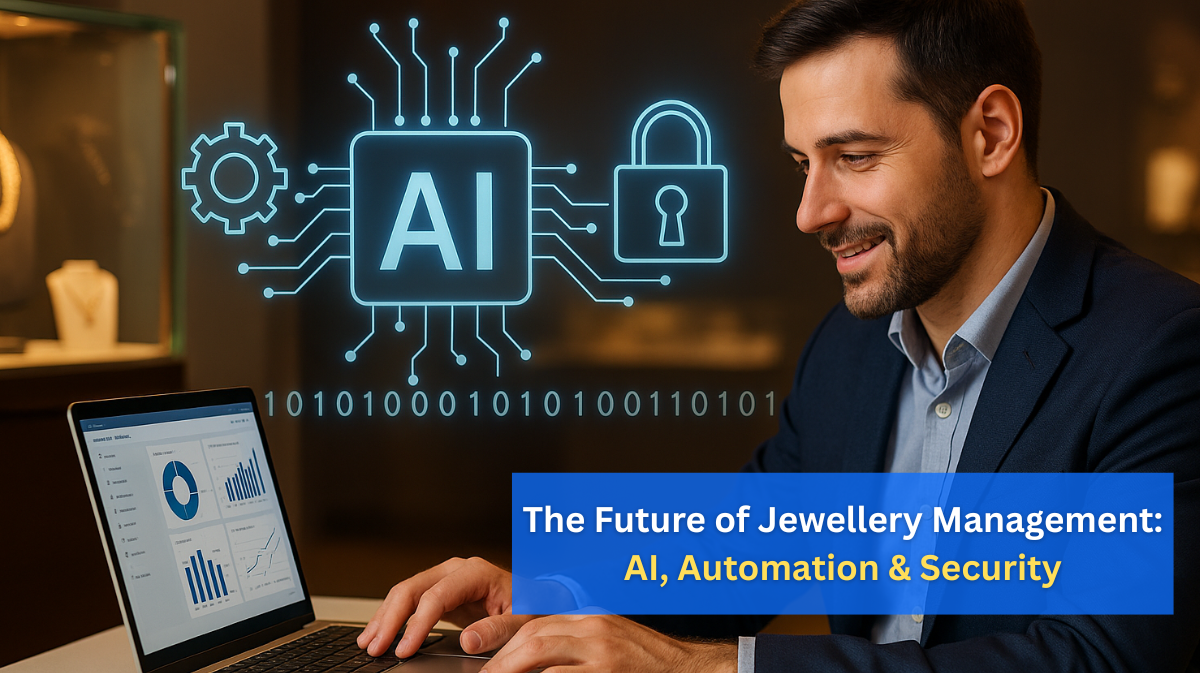
The Future of Jewellery Management: AI, Automation & Security
The jewellery industry is evolving at a rapid pace. In 2025 and beyond, Artificial Intelligence (AI), automation, and advanced security technologies will define how jewellers manage their businesses. From inventory control and pricing to customer engagement and fraud prevention, these tools are reshaping operations for greater efficiency, profitability, and trust.
In this detailed guide, we explore the top technology trends every jeweller should know about — and how to implement them to stay ahead in a competitive market.
1. Artificial Intelligence (AI) for Smarter Decision-Making
AI is no longer a futuristic concept — it’s a powerful tool that’s already transforming how jewellery businesses make decisions. By analysing large volumes of data, AI can deliver accurate, real-time insights that improve sales, customer satisfaction, and operational planning.
Key AI Applications in Jewellery Management:
- Demand Forecasting: AI algorithms study past sales data, seasonal patterns, and market trends to predict peak buying periods and popular designs. This helps avoid overstocking slow-moving pieces or running out of bestsellers during the wedding season.
- Personalised Recommendations: AI-powered POS systems can suggest matching sets, complementary designs, or higher-value items to customers — increasing upselling and cross-selling opportunities.
- Dynamic Pricing: By tracking real-time gold and diamond prices, competitor rates, and demand shifts, AI can suggest optimal pricing strategies that maximise profit without losing competitiveness.
Example: A jeweller in Jaipur uses AI to determine which gold bangles sell best during Diwali and adjusts stock levels and marketing campaigns accordingly.
2. Automation for Efficiency & Accuracy
Automation is streamlining jewellery operations by reducing manual effort, eliminating errors, and speeding up processes. From billing to stock management, automation ensures tasks are completed with precision.
Popular Automation Features:
- Automated Billing & GST Compliance: Instantly generate invoices with correct tax calculations, ensuring legal compliance and saving time.
- Inventory Replenishment Alerts: Get automatic notifications when certain products reach low stock levels, ensuring timely reordering.
- Workflow Automation: Manage the entire journey of a custom order — from CAD approval to delivery — with minimal human intervention.
- Payment & EMI Reminders: Automated follow-ups ensure customers never miss instalments or scheme maturity dates.
Example: A Mumbai-based jewellery store uses workflow automation to track every step of a bridal jewellery order, reducing delivery delays by 40%.
3. Advanced Security for Jewellery Businesses
Security in jewellery management now extends far beyond protecting physical stock. Digital transactions, customer data, and design files also need protection from cyber threats and fraud.
Essential Security Innovations:
- Biometric Authentication: Restrict system access using fingerprint or facial recognition, ensuring only authorised staff handle sensitive operations.
- End-to-End Encryption: Protects customer details, supplier agreements, and confidential pricing data from hackers.
- Blockchain & Digital Certificates: Provide customers with tamper-proof proof of authenticity for high-value jewellery, enhancing trust and resale value.
Example: A diamond manufacturer issues blockchain-based certificates for each stone, allowing buyers to verify authenticity through a QR code.
4. The Rise of Mobile-Friendly Jewellery Management Apps
Mobile technology is empowering jewellers to run their businesses from anywhere. With mobile-friendly ERP and POS apps, owners and staff can access vital data on the go.
Benefits of Mobile Integration:
- Show customers the latest catalogue directly from a tablet or smartphone.
- Check real-time stock availability without calling the back office.
- Process sales, returns, and orders instantly at exhibitions or client meetings.
Example: A salesperson at a jewellery expo in Dubai finalises orders for clients in India using a mobile ERP app — no paperwork needed.
5. AI-Driven Customer Experience
AI is not just helping behind the scenes — it’s revolutionising customer interactions as well.
Customer-Centric AI Tools:
- Chatbots & Virtual Assistants: Offer 24/7 customer support, answer product queries, and even book appointments automatically.
- Virtual Try-On Technology: AI-powered augmented reality (AR) lets customers “try” jewellery pieces using their phone camera before buying.
- Loyalty & Retention Programs: AI tracks purchase history and sends personalised offers, increasing repeat sales.
Example: An online jewellery retailer uses AR try-on to reduce product returns by 30% and improve buyer confidence.
6. Integration with Online & Offline Channels
Today’s jewellery customers often move between online browsing and in-store purchases. A unified, omni-channel approach ensures a seamless shopping experience.
How Integration Works:
- Synchronise inventory between eCommerce stores and physical outlets in real time.
- Manage orders, returns, and exchanges from one dashboard.
- Maintain consistent pricing and promotions across all channels.
Example: A Chennai jeweller’s online store updates automatically when a piece is sold in-store, preventing double-selling or stock errors.
7. Preparing for the Future
The pace of change in jewellery management technology is accelerating. Businesses that adapt early will benefit from:
- Lower operational costs
- Greater accuracy in decision-making
- Enhanced customer trust and loyalty
- Improved competitiveness in domestic and global markets
Conclusion
The future of jewellery management belongs to those who embrace innovation. AI provides the intelligence, automation delivers the efficiency, and security ensures trust. By integrating these technologies into their daily operations, jewellers can not only keep up with market demands but also set new industry standards in 2025 and beyond.
Whether you are a small-town jeweller or a large-scale manufacturer, adopting AI, automation, and advanced security today will help you remain competitive tomorrow.